

Choosing the right mobile app development partner can have a significant impact on your product's performance, development timeline, and long-term growth. For businesses planning to launch an application on both iOS and Android, Flutter offers a practical way to develop and maintain a shared codebase while delivering a consistent user experience across platforms.
However, choosing a Flutter development company requires more than comparing prices or reviewing a company's website. Businesses need to evaluate technical expertise, previous projects, communication, security practices, and the ability to support an application after launch.
In this guide, we cover 10 Flutter app development companies that businesses can consider when planning a new mobile application. We explain their general service focus, the types of projects they may suit, and the factors worth evaluating before making a decision.
Whether you are a startup validating an idea, an established business modernizing its digital products, or an enterprise building a complex mobile platform, this comparison will help you create a more informed shortlist.
Quick Comparison of Flutter App Development Companies
The following companies offer different combinations of mobile development, product design, engineering, and technology consulting. Their suitability depends on your project requirements rather than a universal ranking.
| Company | General Service Focus | May Suit |
|---|---|---|
| American App Coder | Custom mobile and Flutter app development | Businesses seeking a development partner for a tailored mobile product |
| Cheesecake Labs | Product strategy, design, and software engineering | Product-led startups and growing businesses |
| Surf | Flutter-focused application development | Teams prioritizing Flutter expertise |
| Very Good Ventures | Flutter engineering and technical consulting | Technically complex applications |
| Zco Corporation | Custom software and mobile application development | Businesses with broader software requirements |
| Droids On Roids | Mobile product development and engineering | Companies seeking product-focused development |
| Simform | Custom software, cloud, and product engineering | Businesses with complex technical requirements |
| Appinventiv | Mobile application development and digital products | Startups and enterprises developing consumer applications |
| TechAhead | Mobile development and digital engineering | Businesses needing end-to-end product development |
| SoluLab | Software development and emerging technology solutions | Projects involving specialized technology integrations |
1. American App Coder
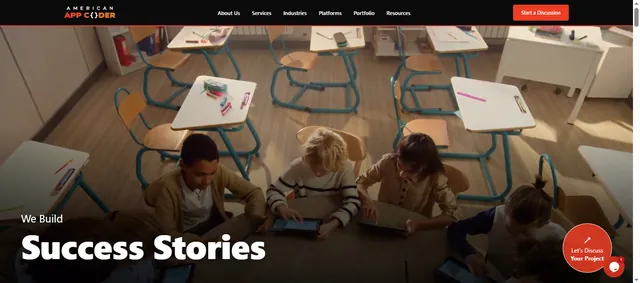
American App Coder is an option for businesses looking for custom mobile application development tailored to specific operational or customer needs. Before hiring any development partner, businesses should discuss the intended product, required platforms, integrations, delivery expectations, and ongoing maintenance arrangements.
For a Flutter project, the key consideration is whether the proposed team can translate the business requirements into a maintainable application that works reliably across supported devices.
Services to Discuss
- Custom mobile application development
- Flutter and cross-platform development
- UI and UX design
- Backend and API integration
- Application testing and quality assurance
- App Store and Google Play deployment
- Post-launch maintenance and improvements
What to Evaluate
Ask American App Coder to demonstrate relevant Flutter projects, explain its development process, and identify the people who will work on your application. Request a detailed proposal covering project scope, deliverables, milestones, testing, ownership of source code, and support after launch.
Best suited for: Businesses seeking a custom mobile application and a development partner that can discuss the complete product lifecycle.
To assess whether American App Coder is right for your project, request a consultation and discuss your requirements, expected timeline, and budget.
2. Cheesecake Labs
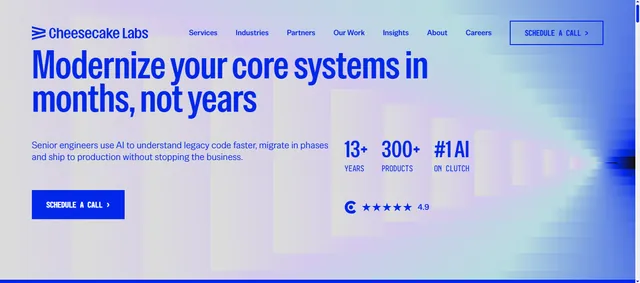
Cheesecake Labs is a software development company known for combining product development, user experience design, and engineering. Businesses evaluating the company can investigate its mobile development portfolio and determine whether its experience aligns with their product category.
For companies building customer-facing applications, the relationship between design and engineering is particularly important. A well-designed interface should support real user workflows rather than simply look attractive in a prototype.
What to Evaluate
Review examples of completed mobile products, the company's approach to product discovery, and its process for translating business objectives into development requirements. Ask how design decisions are tested and how the team measures application quality after launch.
Best suited for: Businesses that place a strong emphasis on product design, user experience, and coordinated software development.
3. Surf
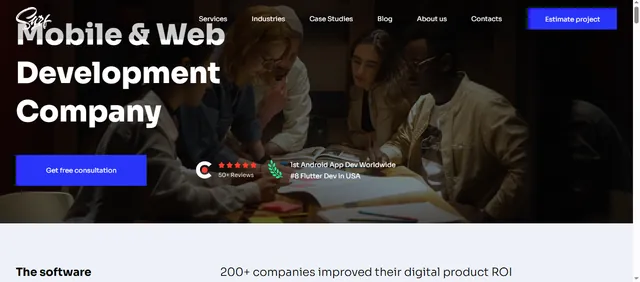
Surf is a mobile development company associated with Flutter and cross-platform application engineering. When considering a Flutter-focused agency, businesses should investigate how much of the proposed team's experience comes from production Flutter projects rather than general mobile development.
Specialized framework knowledge can be useful when an application requires complex interfaces, performance optimization, custom animations, or integrations with existing systems.
What to Evaluate
Ask about the team's experience with Dart, state management, automated testing, application architecture, and native platform integrations. Request examples of applications with requirements similar to yours.
Best suited for: Businesses that want to evaluate a provider with a specific focus on Flutter development and advanced mobile engineering.
4. Very Good Ventures
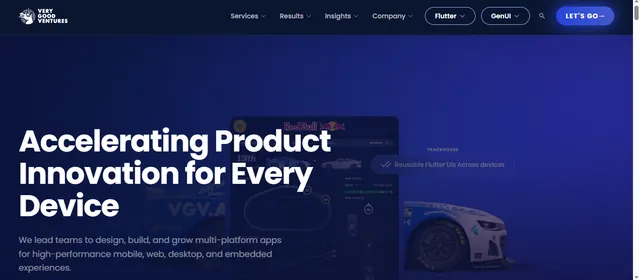
Very Good Ventures is known for its work within the Flutter ecosystem and its emphasis on Flutter engineering. It is worth considering when a project requires careful architectural planning, technical consulting, or specialized framework knowledge.
For technically demanding applications, early architectural decisions can affect development speed, reliability, and the cost of future changes.
What to Evaluate
Discuss how the team structures Flutter applications, manages dependencies, tests business-critical workflows, and handles upgrades as the framework evolves. For larger projects, ask how technical decisions are documented and reviewed.
Best suited for: Businesses that need to investigate specialist Flutter expertise for technically complex products.
5. Zco Corporation
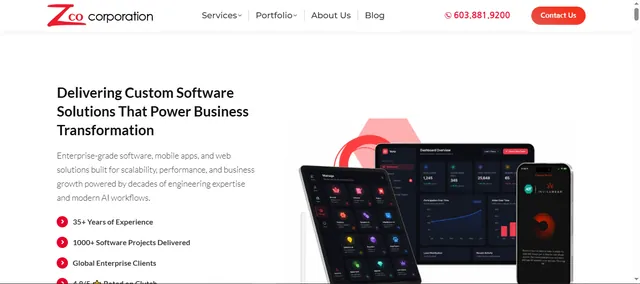
Zco Corporation provides custom software and mobile application development services. Companies that need more than a standalone mobile interface may want to evaluate providers with broader software engineering capabilities.
Many mobile applications depend on backend services, databases, third-party platforms, authentication systems, and administrative dashboards. Coordinating these components is an important part of delivering a functional product.
What to Evaluate
Review the company's experience with mobile applications, backend architecture, integration requirements, security controls, and ongoing support. Clarify which components are included in the project and whether any work will be assigned to subcontractors.
Best suited for: Businesses that need to evaluate a broader software development partner for mobile and related technical requirements.
6. Droids On Roids
Droids On Roids is a software development studio known for mobile product engineering. Businesses researching this company should examine its current service offerings and identify whether its experience matches their specific Flutter requirements.
Product development involves more than completing a list of technical tasks. Teams also need to understand user needs, prioritize features, and make practical decisions about what should be included in the initial release.
What to Evaluate
Ask about discovery workshops, prototyping, development milestones, testing procedures, and the team's approach to incorporating feedback. Verify that the proposed developers have experience with your chosen framework and the features your application requires.
Best suited for: Businesses looking for a product-oriented mobile development partner.
7. Simform
Simform offers software engineering and technology services that can be relevant to businesses building applications connected to broader digital systems.
Projects involving cloud infrastructure, APIs, analytics, and multiple external services require coordination between mobile developers and backend engineers. Evaluating a company's capabilities across these areas can help reduce integration risks.
What to Evaluate
Discuss team composition, cloud and backend experience, security responsibilities, deployment processes, and the approach to ongoing application maintenance. If the project involves several systems, ask for a clear explanation of how those systems will communicate.
Best suited for: Businesses whose mobile applications require broader engineering, cloud, or integration capabilities.
8. Appinventiv
Appinventiv provides mobile application development and digital product services. Businesses considering the company should evaluate its current portfolio, development approach, and experience within their target industry.
For consumer applications, important considerations include onboarding, account management, payments where applicable, performance, accessibility, and the ability to support increasing user demand.
What to Evaluate
Request relevant case studies and ask how the company handles product requirements, user interface design, quality assurance, release management, and post-launch changes. Make sure the proposal distinguishes confirmed deliverables from optional services.
Best suited for: Businesses evaluating a mobile development partner for consumer-facing applications and digital products.
9. TechAhead
TechAhead offers mobile application development and digital engineering services. Businesses planning a new application can assess whether its capabilities, team structure, and development process fit their goals.
A clear discovery phase is especially valuable when a project begins with an idea rather than a complete technical specification. It helps define essential features, identify dependencies, and establish realistic expectations before development begins.
What to Evaluate
Ask how requirements are documented, how technical feasibility is assessed, and how the team handles changes in scope. Request a breakdown of discovery, design, development, testing, deployment, and maintenance costs.
Best suited for: Businesses seeking to evaluate an end-to-end digital product development partner.
10. SoluLab
SoluLab provides software development services and works across technology areas that can include specialized integrations and emerging technologies. Businesses considering the company should determine whether its current capabilities match the actual requirements of their mobile application.
Adding advanced technology is not automatically beneficial. Features involving artificial intelligence, blockchain, analytics, or external data services should solve a clearly defined business problem and justify their implementation and maintenance costs.
What to Evaluate
Ask for examples of comparable projects, an explanation of the proposed architecture, and a realistic assessment of implementation complexity. Clarify how integrations will be tested, secured, monitored, and maintained.
Best suited for: Businesses evaluating software development partners for applications with specialized integration or technology requirements.
What Is Flutter App Development?
Flutter is an open-source UI toolkit maintained by Google. It allows developers to build applications for multiple platforms using a shared codebase and the Dart programming language.
Rather than maintaining entirely separate application code for every platform, a team can share much of its implementation across iOS and Android. Flutter also supports other platforms, although the feasibility of each target depends on the application's requirements and the available integrations.
Flutter does not eliminate every platform-specific task. Some applications still need native code, platform-specific configuration, or separate implementation work to support device capabilities.
Key Benefits of Flutter
- Shared codebase: Developers can reuse substantial portions of application code across supported platforms.
- Consistent interface: Flutter provides tools for creating a coordinated visual experience across devices.
- Efficient iteration: Shared components can make certain development and testing workflows easier to manage.
- Flexible UI development: The framework offers extensive control over interface layout, styling, and animation.
- Centralized maintenance: Common functionality can often be updated in one shared implementation, although platform-specific testing remains necessary.
The practical benefits depend on the project. Businesses should evaluate Flutter against their required features, performance expectations, integrations, and long-term maintenance plans.
Flutter vs. Native App Development
Flutter and native development are both viable approaches. The right choice depends on the product's technical requirements and business objectives.
| Factor | Flutter | Native Development |
|---|---|---|
| Codebase | Shares substantial code across platforms | Usually maintains separate platform implementations |
| Development workflow | Can simplify cross-platform feature delivery | Allows platform-specific development workflows |
| User interface | Supports custom, consistent interfaces | Offers direct access to platform UI conventions |
| Device integrations | Supports many integrations, with native code where needed | Provides direct access to platform APIs |
| Maintenance | Shared logic can reduce duplicated work | Platform changes may require separate implementation |
| Best fit | Many cross-platform applications | Products needing extensive platform-specific behavior |
Neither approach is universally superior. A product with conventional mobile workflows may benefit from Flutter, while a product requiring extensive native functionality may justify native development. A technical assessment should determine the most suitable architecture before the project begins.
What Services Should a Flutter App Development Company Provide?
A reliable development partner should explain how it will manage the complete project, not just the coding phase.
1. Product Discovery and Planning
The team should clarify business objectives, target users, core features, technical dependencies, and success criteria. This phase should result in an agreed scope and a practical development roadmap.
2. UI and UX Design
Designers should create user flows, wireframes, and interface prototypes that reflect the needs of the intended audience. Usability, accessibility, and consistency should be considered alongside visual design.
3. Flutter Application Development
Developers should build the application using an architecture appropriate to its complexity. Code quality, dependency management, state management, and documentation all affect long-term maintainability.
4. Backend and API Integration
Many applications require authentication, databases, notifications, payment services, or connections to existing business systems. The development team should identify these dependencies and define how they will be implemented.
5. Testing and Quality Assurance
Testing should cover key user workflows, different screen sizes, supported operating systems, error conditions, and performance. Automated tests can help protect important functionality as the application changes.
6. Security and Privacy
The team should explain how sensitive data will be handled, how authentication and authorization will work, and how API credentials and application secrets will be protected. Additional compliance requirements depend on the industry and the information being processed.
7. App Store Deployment
The provider should help prepare releases, configure store listings, address platform requirements, and resolve submission issues within the agreed scope.
8. Maintenance and Support
After launch, applications may need bug fixes, dependency updates, compatibility adjustments, security patches, and new features. Confirm the availability and cost of these services before signing a contract.
How Much Does Flutter App Development Cost in the USA?
Flutter app development costs vary substantially depending on the scope of the application. A simple application with a limited feature set requires a different investment from a marketplace, a financial platform, or an enterprise application connected to several business systems.
A useful estimate should be based on defined requirements rather than a generic price advertised online.
Main Factors That Affect Development Costs
- Application complexity: More features, user roles, workflows, and business rules generally require additional development and testing.
- UI and UX requirements: Custom interfaces, complex animations, and extensive prototyping can increase design effort.
- Backend infrastructure: Databases, APIs, cloud services, administrative dashboards, and third-party integrations affect the overall scope.
- Security requirements: Applications processing sensitive information may require additional controls, testing, and compliance work.
- Team experience and location: Rates vary by provider, team composition, and engagement model. Hourly rates alone do not indicate total project value.
- Ongoing support: Maintenance, infrastructure, monitoring, and future improvements should be included in the long-term budget.
How to Get an Accurate Quote
Before requesting a proposal, prepare a short brief covering your target users, required platforms, essential features, external integrations, expected launch date, and approximate budget.
Ask each company to provide:
- A defined scope of work
- A breakdown of development phases
- Estimated delivery milestones
- Testing and deployment responsibilities
- Source code and intellectual property terms
- Post-launch support arrangements
- A process for handling additional requirements
Comparing proposals on the same scope makes it easier to identify differences in cost, assumptions, and deliverables.
How to Choose the Right Flutter App Development Company
Selecting a provider should be a structured evaluation rather than a decision based solely on price or marketing claims.
Review Relevant Projects
Look for applications with features, technical requirements, or user workflows similar to yours. Ask whether the company can explain its contribution to each project.
Verify Client Feedback
Check independent review platforms and look for detailed feedback about communication, delivery, technical quality, and post-launch support. Consider the number, recency, and relevance of reviews.
Assess Technical Expertise
Discuss the proposed architecture, testing strategy, performance requirements, and any native integrations. Ask to speak with the technical lead who will be responsible for the project.
Understand the Development Process
A credible provider should explain how it manages requirements, milestones, progress updates, approvals, and scope changes.
Confirm Ownership and Access
The agreement should clarify ownership of source code, design assets, documentation, cloud accounts, and other project deliverables. Establish how access will be transferred if the relationship ends.
Evaluate Communication and Support
Confirm who will be your primary contact, how often progress will be reported, how issues will be escalated, and what support is included after launch.
Compare Total Project Value
The lowest initial quote may exclude essential services or depend on assumptions that later increase costs. Compare the full scope, relevant experience, delivery risks, and support arrangements.
Common Mistakes to Avoid When Hiring Flutter Developers
Businesses can reduce project risk by addressing several common mistakes before development starts.
- Choosing only on price: A low quote is not useful if it excludes essential features, testing, or maintenance.
- Skipping technical discovery: Starting without a clear scope can lead to conflicting expectations and repeated changes.
- Ignoring testing: An application that works on one device may still have issues on other supported devices or operating system versions.
- Overlooking security: Authentication, access control, data handling, and dependency updates should be considered from the beginning.
- Failing to define ownership: Source code, accounts, credentials, and documentation should be addressed in the contract.
- Treating launch as the finish line: Applications need ongoing maintenance to remain compatible, secure, and useful.
Why Consider American App Coder for Your Flutter Project?
When evaluating a Flutter app development company, businesses should look for a provider that understands both the technical requirements and the intended business outcome.
American App Coder can be included in your evaluation process if its current services, portfolio, and proposed team align with your needs. Before making a decision, review relevant project examples and discuss the specific capabilities required for your application.
A useful initial conversation should cover:
- Your business objectives and target audience
- Essential features and supported platforms
- UI and UX requirements
- Backend systems and third-party integrations
- Development milestones and testing
- Budget, ownership, and maintenance
Request a project-specific proposal so you can understand the proposed approach, deliverables, timeline, and ongoing responsibilities before committing.
Planning a mobile application? Contact American App Coder to discuss your requirements and determine the right development approach for your product.
Talk to American App CoderFrequently Asked Questions
A Flutter app development company builds applications using Flutter and Dart. Depending on its services, it may also provide product planning, UI and UX design, backend integration, testing, deployment, and maintenance.
Flutter can be a strong choice when a business wants to share substantial application code across iOS and Android. Its suitability depends on the required features, native integrations, performance expectations, and maintenance needs.
The timeline depends on the application's complexity, feature scope, integrations, design requirements, and testing needs. A smaller initial release may take considerably less time than a complex enterprise product. A provider should estimate the timeline after reviewing the requirements.
There is no single price that applies to every project. Costs depend on functionality, design, backend infrastructure, integrations, team rates, and ongoing support. A detailed scope is the most reliable starting point for an estimate.
Yes. Flutter applications can connect to backend services, APIs, databases, and many third-party platforms. The feasibility and complexity depend on the systems involved, API availability, authentication requirements, and the integration work required.
Review relevant projects, verify client feedback, assess technical knowledge, clarify the development process, and confirm source code ownership. You should also establish testing responsibilities, delivery milestones, and post-launch support.
Flutter can support complex applications, including products with extensive interfaces and integrations. However, architecture, backend capacity, security, testing, and platform-specific requirements must be planned appropriately.
Many providers offer maintenance, but the scope varies. Confirm whether bug fixes, operating system compatibility updates, dependency upgrades, security patches, monitoring, and new features are included in the contract or billed separately.
Final Thoughts
Choosing among Flutter app development companies in the USA requires a clear understanding of your product, budget, technical requirements, and long-term plans. Each provider brings a different combination of engineering capabilities, product experience, team structure, and support services.
Instead of relying on rankings alone, compare relevant portfolios, request detailed proposals, verify client feedback, and assess how each company plans to deliver and maintain your application.
The right development partner should offer a clear technical approach, realistic milestones, transparent communication, and a practical plan for supporting your product after launch. Taking the time to evaluate these factors can help you make a more confident decision and build an application that supports your business goals.